
About
Bartatilas
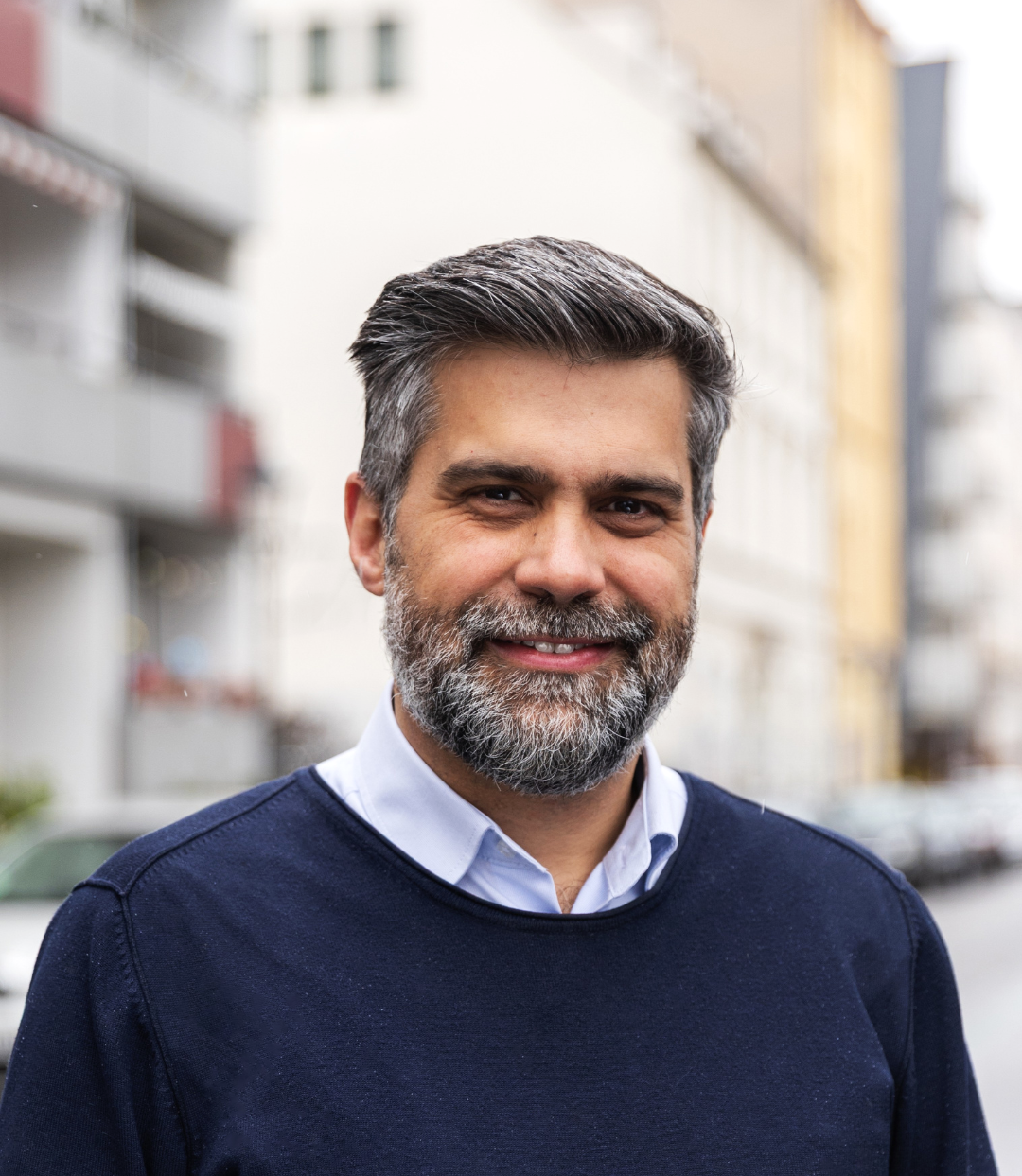
I am an architectural historian, curator, and architectural mediator.
I bring architectural heritage into public life — through exhibitions, public programmes, writing, talks, and guided tours.
I work with cultural institutions, foundations, universities, and civil society organisations across Europe.
The story
From the city
to the archive —
and back again
Cities do not change on their own — or through grand architectural gestures alone. Cities change when we learn to see them differently.
This is not a framework I developed later to describe my work. It was a direction I recognised even as a student — when I understood that what drew me was not the construction of buildings, but their meaning and how cities and buildings shape people’s lives.
My work as an architectural mediator moves across three interconnected layers:
how we see the city · how we think across disciplines and cultures · how knowledge becomes something shared.
Everything I do starts from one idea: deep understanding is what makes change possible.
This is what I call architectural mediation — and my work is dedicated to turning that understanding into public experience.
Athens, 2014. The city is in deep financial crisis. Uncertainty everywhere — and in neighbourhoods like Kypseli, social tensions were making people afraid to spend time outside.
In that neighbourhood I curated Urban Details, a public exhibition focusing on this changing of perspective. I still remember a group of schoolchildren who came to visit. After the tour, we started a conversation about their neighbourhood. I asked them what they liked about it. Their answer was immediate: they liked it when it rained — but not because of the rain itself. Their parents were afraid and asked them to come home immediately after school. The rain gave them an excuse to sit and spend more time together — on a bus stop bench under a covered arcade — without their parents worrying.
That moment — and what those children said — confirmed something simple but essential I had long believed: a city is not defined by its design, but by what it allows people to do — to meet, to stay, to relate. Ever since, a city bench means something different to me.
For years now, I have been speaking three languages on a daily basis — Greek, German, and English. But language is never only words. It carries cultural codes with their own logic and assumptions about what is obvious, what is important, and what does not need to be said — each one a distinct history and way of being in the world.
Learning to move between them — literally and metaphorically — has taught me to hold multiple perspectives simultaneously, to resist easy conclusions, and to find common ground across difference without erasing it.
The Bauhaus understood this instinctively. It was never just a school. It was a community drawn from across Europe and beyond, working across art, craft, and architecture — aiming for a new way of living, and therefore a new society, at a time of profound political instability. When it was forced to close in 1933, its members scattered across the globe, carrying its ideas with them and planting them in new contexts.
The Bauhaus did not produce a single language but rather a way of thinking across borders, cultures and disciplines.
Yet for decades, his work remained largely unknown outside a small circle of specialists. No major exhibition. No accessible publication. A story waiting to be told.
Researching his life and writings for my doctoral thesis, I realized that the gap was not only about Despotopoulos. It was about something larger: the distance between what scholars know and what the broader public can access.
The exhibition From Building to Community: Ioannis Despotopoulos and the Bauhaus was an attempt to close that gap — to take what I had found in the archive and make it something people could experience, understand, and connect to their own lives. It is on permanent display at the Athens Conservatoire, a building Despotopoulos designed himself as a space of educational community.
Today, this commitment has become the centre of my work — what I call architectural mediation. Through guided tours at the Bauhaus buildings in Dessau, through writings, talks, digital presence and public programmes. The form changes. The question remains the same: how do we make the knowledge that matters reach the people it belongs to?
Credentials & Work
Education & Research
-
2024
PhD — History and Theory of Architecture Bauhaus University Weimar, Department of Architecture and Urbanism "Bauhaus International: The Intellectual Formation of the Greek Architect Ioannis Despotopoulos. A Journey from the Bauhaus and Weimar Republic to Athens, Stockholm and post-War West Berlin"
-
2010
MFA — Public Art & New Artistic Strategies Bauhaus University Weimar, Department of Fine Arts incl. Student Exchange & Bauhaus Labs Seminar · School of the Art Institute of Chicago, USA (2009)
-
2005
Diploma — Architecture University of Thessaly, Volos, Greece
Grants & Recognition
-
2026
Seal of Excellence European Commission · Marie Skłodowska-Curie Actions Awarded to research proposals of exceptional quality that could not be funded due to budget constraints. Project score: 92.4/100. Research project on architectural heritage mediation, democratic cohesion, and European institutional networks.
-
2019–21
Bauhaus Stipendium Bauhaus University Weimar
-
2014–15
Actors of Urban Change Programme Robert Bosch Stiftung
Publications (Selection)
-
2024
Bauhaus International: The Intellectual Formation of the Greek Architect Ioannis Despotopoulos. A Journey from the Bauhaus and Weimar Republic to Athens, Stockholm and post-War West Berlin Doctoral thesis · Bauhaus University Weimar English · Visit site
-
2015
Mapping and Research of a Neighbourhood — Kypseli Research project · Online platform Greek · English · Visit site
-
2019
Jan Despo. Three Texts on Bauhaus Editor · Goethe-Institut Athens & Benaki Museum Supported by the German Federal Ministry of Foreign Affairs Greek · German · English · More info
-
2023
"Solidarity Networks in Architecture: Akademie der Künste and Jan Despo" In: Vachtsevanou Ch., Zeppenfeld S., Karamanolakis V. (eds.), Human Rights, Trade and Diplomacy in Greek-German Relations, 1967–1974 Bonn: Dietz Verlag · English
Press & Public Writing
-
—
Regular contributor to major Greek newspapers and outlets on urban heritage, architectural history, and the life of cities. A selection:
-
2024
"Χρήστος Παπούλιας: Ευρύ βλέμμα, σε διάλογο με τον πολιτισμό" "Christos Papoulias: A Broad Vision in Dialogue with Culture" Kathimerini · Read →
-
2022
"Η άδικη παρεξήγηση και το σύμβολο της αθηναϊκής ζωής" "The Unjust Misunderstanding and the Symbol of Athenian Life" Ta Nea · Read →
-
2016
"Οδός Πατησίων, πρωτοβουλίες και εικαστικές δράσεις για μια θελκτική εικόνα" "Patission Street: Initiatives and Artistic Actions for an Attractive Urban Image" Kathimerini · Read →
Collaborating Institutions
Cultural Institutions
Civil Society
Let's work together!
Exhibitions, public programmes, talks, tours, writing —
for cultural institutions, foundations, museums, and universities.
If something here resonated with what you're trying to do,
I'd love to hear from you.